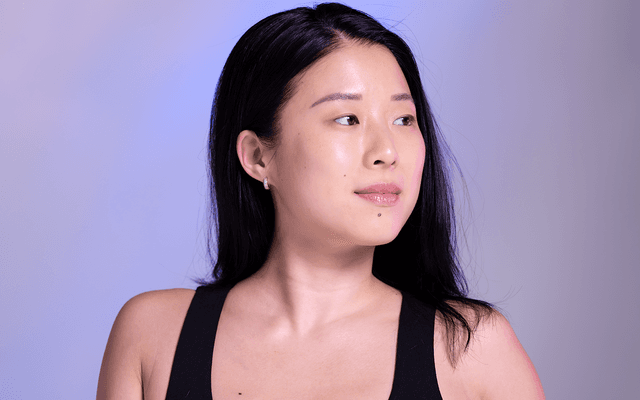

I’ve been a Board-Certified PA for 12 years. I started in general surgery and the emergency room, moved to facial plastic surgery, and have now spent more than a decade in aesthetics. Glo₂Facial was the first device I brought into my own practice, three years ago. Today it’s part of nearly every skin quality treatment plan I create for my patients.
My Interest Started with My Own Skin
About ten years ago, almost every new product I tried gave me a reaction. My skin barrier wasn’t doing its job, so I started studying barrier health and reading every ingredient list.
That taught me that a damaged barrier looks different from patient to patient. It can show up as allergic reactions, sensitivity, redness, rosacea or acne.
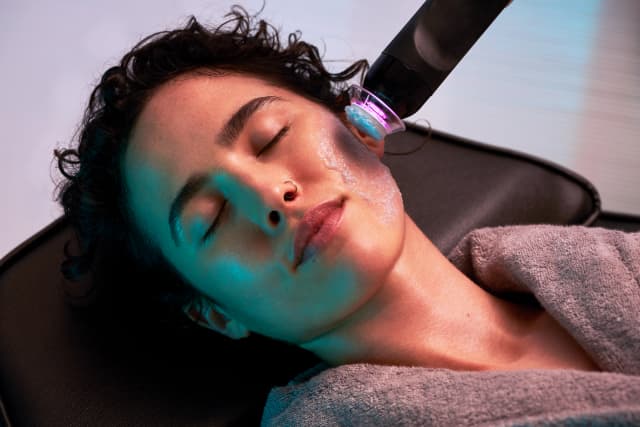
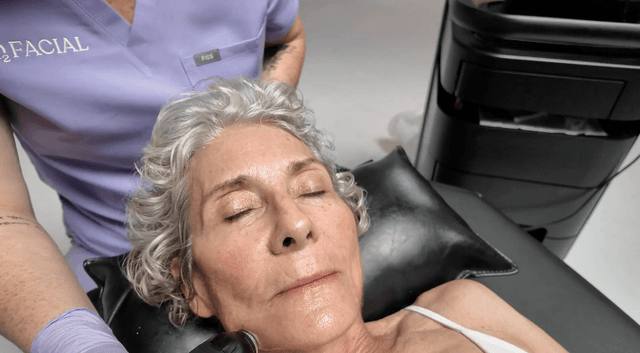
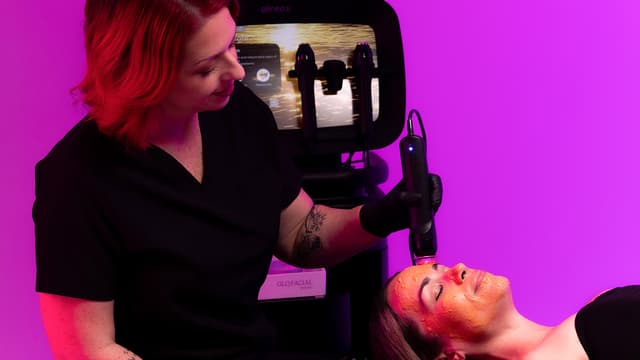
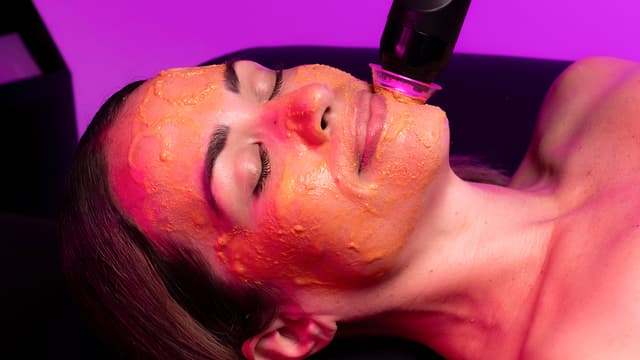
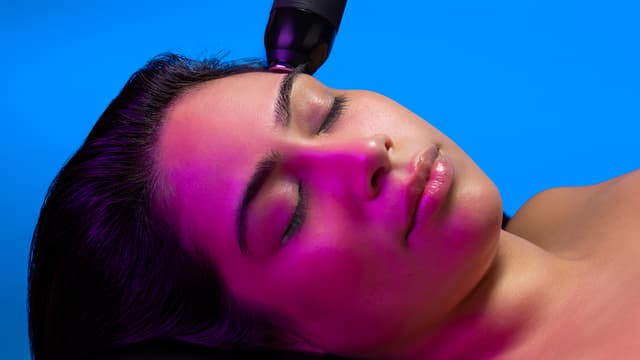
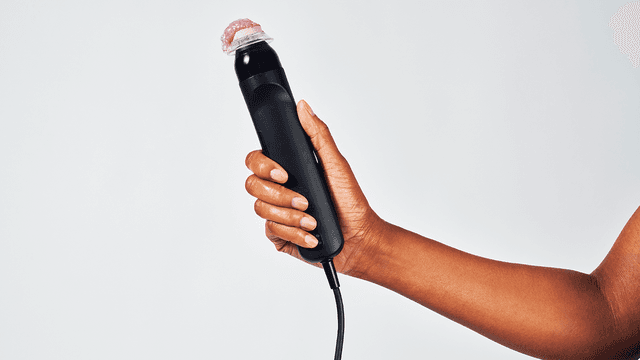
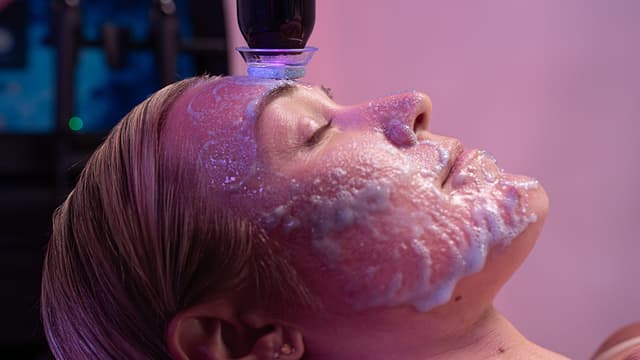
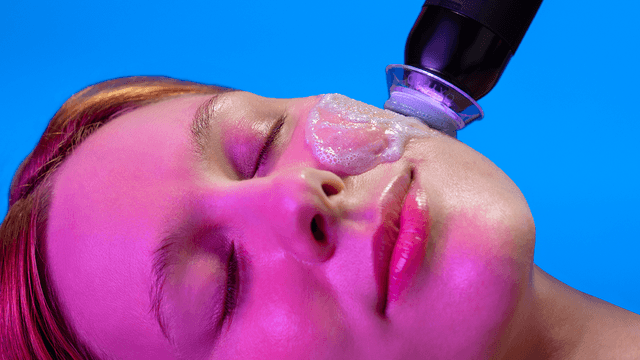
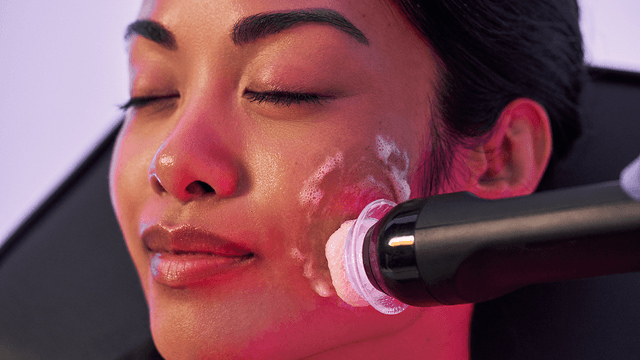
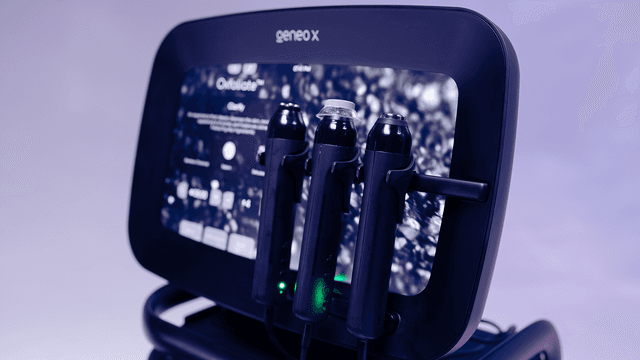
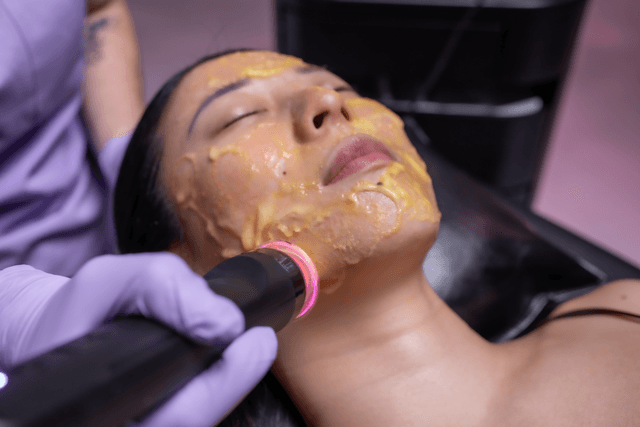
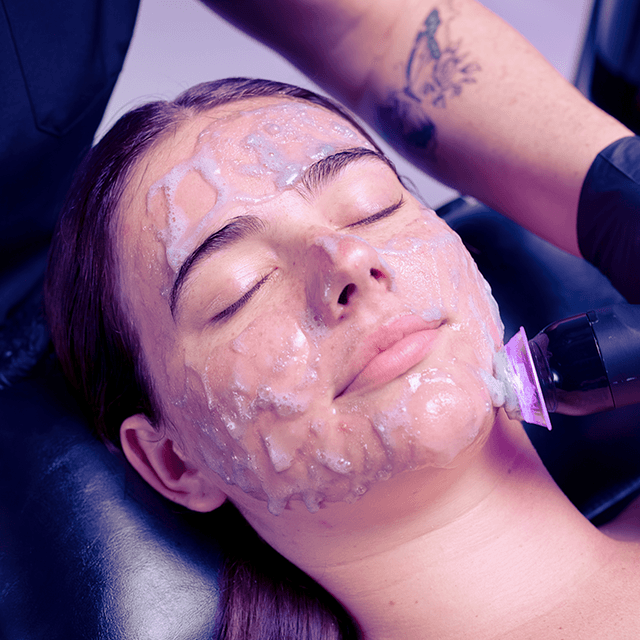
When I looked at Glo₂Facial, it matched what I already believed about the barrier. It exfoliates gently with Oxfoliation™, applies active serums with Ultrasound, and with RF Pro, it adds a step aimed at the dermis.
Glo₂Facial Belongs in the Consultation, Not as an Add-On
I think rushed consultations cost providers more than almost anything else, both in patient relationships and in revenue.
My consultations cover seven categories: neurotoxin, filler, biostimulators, lasers, Glo₂Facial, medical-grade skin care and body treatments. Because Glo₂Facial is one of the seven, it’s in the plan from the first visit.
That changes how often I see patients. As an injector, I see most of them three to four times a year. With Glo₂Facial, they’re in every four to six weeks.
I explain it to patients like going to the dentist. You can’t count on your dentist to be the only one who flosses. I might be doing biostimulators or resurfacing, but what are you doing for your skin in between?
I also book a treatment when a patient starts a new at-home routine. Around two to three weeks in, some patients lose patience, but a Glo₂Facial treatment keeps them on track and lets me check how the routine is going at home. Results build over a series, which is what makes regenerative treatment different from aggressive correction.
Before and After Lasers and Injectables
The healthier the skin, the easier it is for me to inject. I use Glo₂Facial to prep skin before ablative lasers and injectable appointments, often on the same day. I recently had a patient drive in from Texas. She had all four Glo₂Facial steps, then filler, a biostimulator, a laser treatment and neurotoxin in one visit.
If an injector has a gap in their schedule, they can offer a Glo₂Facial treatment before the patient’s Botox appointment. This way the visit starts with something that feels good, and patients see a visible change in their skin before the injections.
After a non-ablative laser, I book Glo₂Facial 7 to 10 days out. After a fully ablative laser, I wait at least 10 days, usually 12 to 14, depending on how the skin has healed. Protect is my go-to pod for these visits. I’ve never had a patient have sensitivity or a setback in healing from pairing Glo₂Facial with a laser.
Patients like it, too. While healing from a laser, they’re swollen and flaking, and their makeup doesn’t go on smoothly. A treatment on days 7 to 14 gives them something to look forward to. It also brings them back in, so I get better after photos.
Put It in the Package
Every laser package in my practice includes Glo₂Facial before or after the laser. A package is your chance to get patients to follow your ideal treatment plan, so build that plan into it.
What Each Step Adds
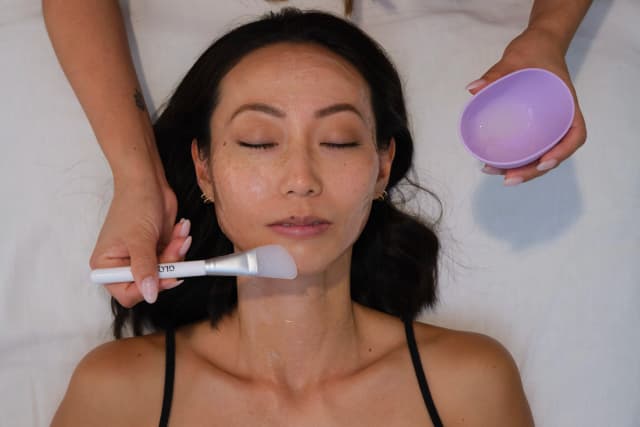
The four steps are in a set order, and each one gets the skin ready for the next.
RF Pro: Don’t skip this step. I make it standard for every adult patient. It comes first, and patients love how it feels, which helps with the rest of the treatment.
Oxfoliation: I tell patients that bringing more oxygen to the skin’s surface supports healing.
Ultrasound: This is my wow moment. Right after it, I see dry skin under the eyes look fuller and redness look reduced.
Detox: Some patients ask for this step by name, especially when allergies make them puffy during season changes. I spend extra time on it for patients who hold more fluid.
How I Choose Pods
I pick the pod based on what the skin needs that day. Maybe the patient just got back from a humid vacation or broke out after a stressful week. I can go to the opposite end of the intensity scale from one visit to the next and still be treating that patient’s skin. Patients like having a say in it, too.
One Patient’s Six-Treatment Series
One of my long-time patients had tried almost everything on our menu. She was in her early 50s, about to become a grandmother, and told me her skin looked dull. I thought her skin barrier needed support.
We did six Glo₂Facial treatments with RF Pro, two to three weeks apart. Her after photo shows a more defined jawline, smoother texture, a better look under the eyes and softer fine lines around the mouth. She now comes in once a month to maintain it.
This matters most for providers who don’t inject. With Glo₂Facial, an esthetician can still offer a treatment that visibly improves the look of wrinkles, pore size and texture.
How I Explain a Series
When patients hesitate over the cost, I go back to the consultation. They come in because something about their skin bothers them, so I give them a clear plan: six treatments, then monthly maintenance, with before and after photos. I check in halfway through and again at the end.
Patients want to be cared for. When they can tell you’re invested in them, they follow the plan.
How I Launched It
I chose Glo₂Facial for two business reasons. The product cost per treatment is fixed, so I’m not buying extra serums or charging patients for add-ons. And patients get the same treatment no matter who performs it, whether that is one of my estheticians, my RN, my PA or me.
My practice is small, and we run two devices. Both are booked all day.
Here’s what worked for us:
Packages, not single treatments. Three at minimum, ideally six.
A monthly membership after the series. It’s the simplest way I’ve found to build patient retention.
A three-level menu. Essential leaves out dermaplaning. Elevate adds it and is our most popular. Luxe adds extras like a scalp massage, hand massage and LED.
A demo day. Patients paid a small fee, enough to cover product cost, for a short treatment. Packages of 3, 6 and 12 were discounted that day only.
A split-face demo for RF Pro. We treated one side of the face, sat the patient up to compare, then treated the other side.
Before and after photos. Take a before photo, then an after photo 15 to 30 minutes later. Don’t add extra serums, so the photos show only the treatment.
Patients need to see it and feel it. Once they do, they keep coming back.
Part of the Plan from Day One
Glo₂Facial doesn’t replace my lasers or injectables. It prepares the skin for them, supports it afterward and keeps patients coming in every four to six weeks in the months between.
Kayla Hale, PA-C, is a board-certified physician assistant and the owner and CEO of HaleStorm Aesthetics & Wellness in Oklahoma City. She is a nationally recognized trainer and speaker, a Glo₂Facial key opinion leader and a member of the Glo₂Facial clinical advisory board.
 by Kayla Hale, PA and Founder & CEO of HaleStorm Aesthetics & Wellness